Federal Student Loan Limits 2026: What Nigeria Students Need to Know
The federal student loan limits 2026 introduce new borrowing caps for graduate students starting July 1. Most graduate students can now borrow only $20,500 yearly, while select professional programmes retain $50,000 access. Nigerian students studying abroad need alternative funding strategies. Learn what changed and how to fund your education.
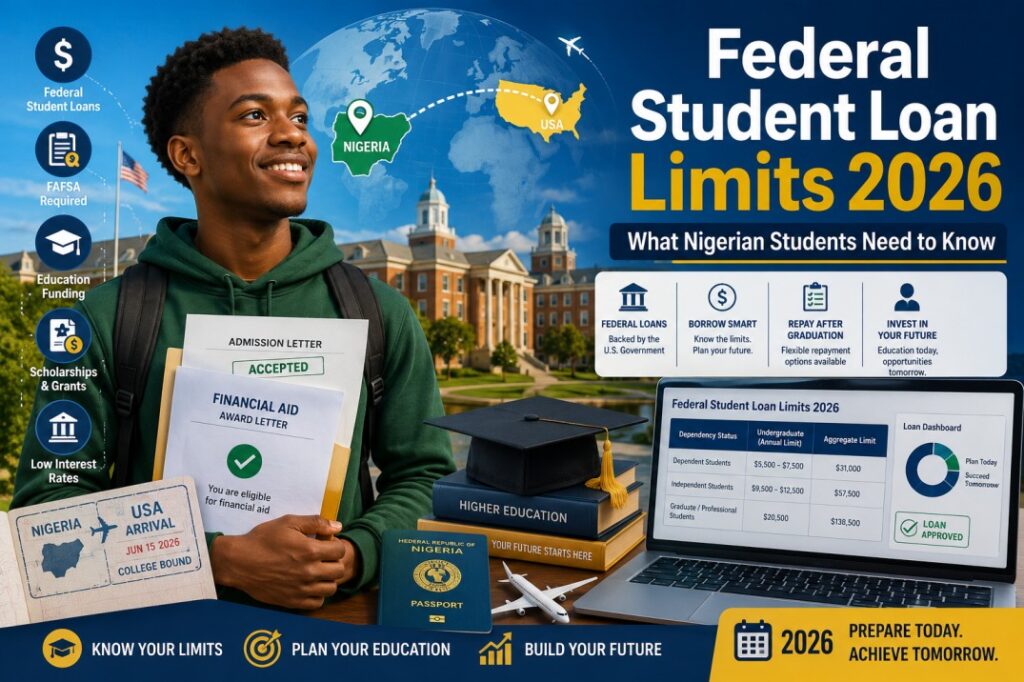
The federal student loan limits 2026 have introduced significant changes that affect graduate and professional students worldwide, including those from Nigeria studying abroad. Starting July 1, 2026, new regulations from the U.S. Education Department will restrict how much money most graduate students can borrow annually. For Nigerian students planning to pursue master’s degrees or professional qualifications in the United States, understanding these changes is crucial for your education financing strategy.
What Are the New Federal Student Loan Limits in 2026?
Beginning July 1, 2026, the U.S. Department of Education implemented stricter borrowing caps for graduate students. Most graduate and professional students can now borrow a maximum of $20,500 per year, down from previous limits. However, students in select professional programs—including medicine, law, optometry, and dentistry—retain access to higher loan limits of $50,000 per year.
This change affects nursing students significantly. According to Inside Higher Ed, the Education Department finalized the new loan limits in April 2026, sparking debate among educational institutions and professional associations about workforce shortages in critical healthcare fields.
Why Did This Change Happen?
The Trump administration implemented these federal student loan limits 2026 to address concerns about student debt accumulation and federal lending exposure. Policy makers argued that limiting borrowing would reduce the burden of education debt on graduates, particularly in fields where employment prospects may not justify the debt load.
However, colleges and professional associations have pushed back against these restrictions. Universities and healthcare organizations warned that the restrictions could worsen workforce shortages in nursing, teaching, and social work, critical professions facing severe labour gaps.
How This Affects Nigerian Graduate Students Abroad
If you’re a Nigerian student planning to pursue a master’s degree, PhD, or professional qualification in the United States, these federal student loan limits 2026 mean you’ll need to explore alternative funding sources:
- Scholarships and grants (often not limited by these caps)
- Private student loans from alternative lenders
- Family financial support or personal savings
- Work-study programmes and part-time employment
- University-sponsored financial aid packages
Furthermore, you should contact your intended university’s financial aid office directly. Many institutions offer institutional aid that isn’t subject to federal loan limits.
What About the House GOP Override Attempt?
In June 2026, House Republicans proposed amendments to override some of these restrictions, specifically for nursing master’s and doctoral programmes. The budget amendment advanced out of committee, but approval faced significant hurdles. Even if passed, such changes wouldn’t take effect until October 1, 2026, at the earliest, and Congress historically struggles to pass federal budgets on time.
This means the July 1 deadline applies regardless of pending legislative changes.
Action Steps for Nigerian Students
- Contact U.S. universities directly to understand their specific financial aid packages before applying
- Research scholarship opportunities for international students from organisations like the Fulbright Commission and private foundations
- Explore alternative lenders that offer private education loans to international students
- Calculate your total funding needs early—don’t wait until after admission
- Check with the Nigerian government for overseas education financing schemes Nigerian education funding abroad
Frequently Asked Questions About Federal Student Loan Limits 2026
Do these loan limits affect Nigerian citizens studying in the USA?
Only if you’re eligible for federal student loans as an international student. Most Nigerian students aren’t eligible for direct federal loans; however, permanent residents and some visa holders may qualify. Check with your university’s international student office for your specific eligibility status.
Can nursing students borrow more under the new 2026 limits?
Currently, nursing students fall under the $20,500 annual limit. However, House Republicans proposed amendments in June 2026 to raise nursing limits to $50,000, though these hadn’t passed into law as of the July 1 deadline. Monitor official Education Department announcements for updates.
What’s the best funding alternative if I can’t borrow enough?
Combine multiple sources: university scholarships (often unlimited), private education loans, employer sponsorship programmes, and family contributions. Many top universities have robust aid packages for graduate students that can offset federal loan restrictions.
Key Takeaways
The federal student loan limits 2026 represent a significant shift in how U.S. graduate education is financed. While the immediate impact targets American citizens and eligible international students, it’s a clear signal that education financing is becoming more competitive. Nigerian students must plan ahead, explore diverse funding channels, and engage directly with universities to secure their education abroad.
👉 Have you been affected by these changes? Share your experience or questions in the comments below, and don’t forget to check the official U.S. Department of Education website for the latest updates on loan limits and policy changes.