Nigeria Manufacturing Crisis 2026: What Students Need to Know
Nigeria’s manufacturing credit has dropped 23% to N6.6 trillion in 2026. Learn what this crisis means for your career prospects, job opportunities, and which fields offer better future growth. Essential knowledge for JAMB candidates and students planning their future.
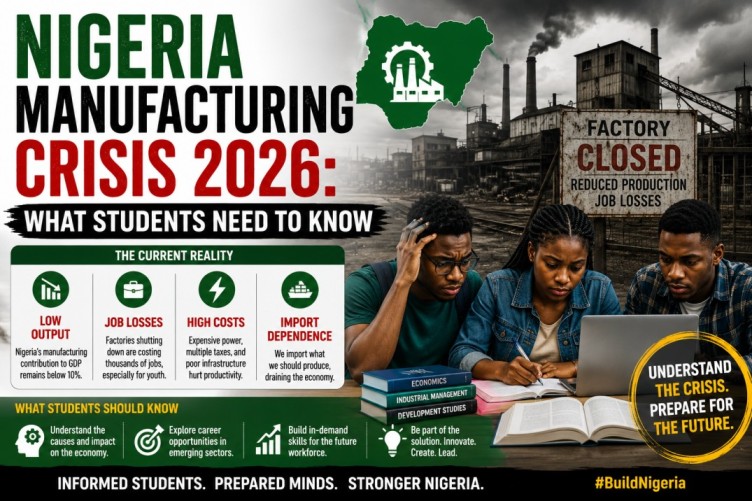
The Nigeria manufacturing credit crisis 2026 is making headlines, and if you’re a student thinking about your career future, you should understand what’s happening. According to The Guardian Nigeria, credit available to Nigerian manufacturers has dropped by a shocking 23% to N6.6 trillion. This decline is creating real challenges for Nigeria’s industrial sector, and it’s worth knowing about—whether you’re preparing for JAMB, considering business studies, or just curious about the economy you’ll graduate into.
What’s Happening to Manufacturing Credit in Nigeria?
Nigeria’s banks are pulling back from lending to manufacturers. The money available for factories, production plants, and industrial operations has shrunk significantly. To put this in perspective, the Manufacturing Association of Nigeria (MAN) Director-General explained that manufacturing is now lagging far behind oil and gas (N10.59 trillion) and finance (N9.24 trillion). Banks prefer lending to speculative activities rather than investing in real production. This is a systemic problem that weakens Nigeria’s industrial base.
How Does This Affect Your Future?
Job Market Challenges
When manufacturers can’t access credit, they can’t expand operations or hire new workers. Fewer jobs in manufacturing means fewer entry-level positions for fresh graduates. This affects students studying engineering, business, supply chain management, and related fields.
Lower Production Capacity
Capacity utilisation in Nigerian factories is dropping. This means factories aren’t running at full strength, reducing their ability to produce goods competitively. Furthermore, Nigeria is falling behind countries like India (whose bank credit to industry grew 9.6%) and Vietnam (targeting 20% credit growth for manufacturing). Your future employers may struggle to compete globally.
Economic Growth Concerns
Manufacturing is crucial for any country’s development. In addition to job creation, it drives innovation, export revenue, and technological progress. Understanding Nigeria’s economic growth and career prospects can help you make informed decisions about your field of study.
What Can You Do About This?
- Stay informed about Nigeria’s economic policies and reforms
- Consider studying fields that support manufacturing recovery (engineering, technology, finance)
- Look into opportunities in growing sectors like telecommunications and digital services
- Prepare yourself with skills that make you competitive regardless of sector
FAQs About Nigeria’s Manufacturing Credit Crisis
Why are banks giving less credit to manufacturers?
Banks prefer lending to finance and oil sectors because they see faster returns. Manufacturing requires long-term investment with delayed profits, making it riskier in their view. However, this preference for speculative activities over productive sectors weakens Nigeria’s economy long-term.
What countries are doing better with manufacturing credit?
India’s bank credit to industry grew by 9.6%, and Vietnam is targeting 20% credit growth specifically to fuel manufacturing. These countries recognise that manufacturing drives sustainable economic development and job creation.
Should I avoid studying manufacturing or engineering?
Not necessarily. While the current situation is challenging, Nigeria still needs skilled engineers and business professionals. Moreover, this crisis may create opportunities for innovators who can help revive the sector. Focus on developing strong technical and leadership skills regardless.
The Bottom Line
Nigeria’s manufacturing credit crisis is real, but it’s also a signal that change is needed. Government policymakers are aware of the problem. As a student, use this knowledge to guide your career choices, explore emerging sectors in Nigeria’s economy, and stay adaptable. The future belongs to those who understand economic trends and position themselves strategically.
What are your thoughts on this crisis? Share this article with classmates preparing for JAMB or considering business-related courses. Check the official JAMB portal for the latest admission updates and course offerings in engineering and business studies.