Solar Cold Storage for Nigerian Farmers 2026
Solar cold storage technology is transforming Nigerian agriculture by helping smallholder farmers reduce post-harvest losses, preserve produce quality, and access global markets. Learn how this innovation creates career opportunities for students and supports Nigeria’s agricultural growth.
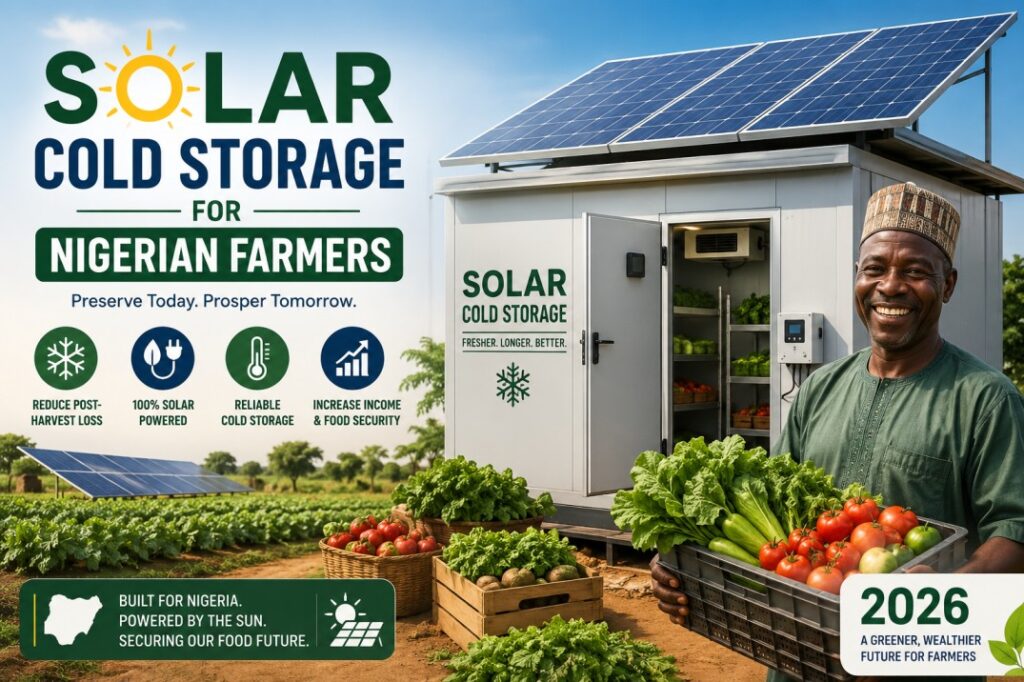
If you’re a Nigerian student interested in agricultural entrepreneurship or sustainable technology, understanding solar cold storage agriculture Nigeria is becoming increasingly important. Recent developments show that solar-powered cold rooms and cooling hubs are revolutionising how smallholder farmers preserve perishable goods, reduce post-harvest losses, and access premium markets—all without depending on unreliable electricity grids.
What Is Solar Cold Storage and Why Does It Matter for Nigerian Farmers?
Solar cold storage refers to off-grid cooling systems powered entirely by solar energy. These facilities—cold rooms, warehouses, and cooling hubs—allow farmers across Kenya, Nigeria, Ethiopia, Rwanda, and South Africa to keep fruits, vegetables, and other perishables fresh for longer periods. According to AP News reporting, this innovation is gaining serious momentum as smallholder farmers seek affordable solutions to post-harvest challenges.
The biggest challenge these farmers face is maintaining product quality after harvest. Without proper cold storage, perishables spoil quickly, forcing farmers to sell at lower prices or lose entire harvests. Solar cold storage eliminates this problem sustainably.
Key Benefits for Nigerian Agricultural Students and Young Entrepreneurs
- Reduces Post-Harvest Losses: Farmers can now preserve produce longer, reducing waste from 30-50% to just 5-10%
- Increases Market Access: Fresh produce meets quality standards for export and premium domestic markets
- Lowers Operating Costs: No reliance on expensive, unreliable grid electricity—solar power is free and renewable
- Creates Employment: Cooling hubs require technicians, managers, and logistics specialists
- Supports Climate Action: Aligns with Nigeria’s sustainability goals and attracts green financing
The Financial Challenge and Emerging Solutions
Whilst the benefits are clear, smallholder farmers have historically struggled with the upfront investment. Solar cold storage systems cost approximately $30,000 or more—a barrier for many. However, financing models, government grants, and international agricultural development programmes are increasingly bridging this gap. For Nigerian students interested in agribusiness or agricultural economics, this represents a growing opportunity for innovation and investment agricultural entrepreneurship opportunities Nigeria.
What This Means for Your Future in Nigeria’s Agricultural Sector
Whether you’re pursuing a degree in agricultural science, business, or engineering, solar cold storage technology offers exciting career paths. From designing and installing systems to managing cooling hubs or trading through them, opportunities abound. Furthermore, Nigeria’s push toward food security and export-led growth makes this sector strategically important for economic development.
Frequently Asked Questions About Solar Cold Storage in Nigeria
How long can solar cold storage keep produce fresh?
Solar cold storage systems can extend the shelf life of perishables by 2-4 weeks or more, depending on the crop type and temperature settings. This extended freshness allows farmers to reach distant markets and negotiate better prices, transforming their income potential.
Can Nigerian farmers get loans or grants to install solar cold storage?
Yes. Development banks, NGOs, and government agricultural agencies increasingly offer financing schemes and grants for sustainable farming technology. Students should explore programmes through the Federal Ministry of Agriculture and organisations focused on rural development.
What skills do I need to work with solar cold storage technology?
Relevant qualifications include electrical engineering, renewable energy technology, agricultural science, supply chain management, and business administration. Many technical institutes now offer certification courses in solar energy systems and agricultural technology.
Ready to explore agricultural innovation? If you’re a student passionate about sustainable farming, technology, or rural entrepreneurship, research organisations leading this charge and consider internships or volunteer work. Stay updated on JAMB and tertiary institution programmes in agricultural sciences and renewable energy. Share this article with classmates interested in Nigeria’s agricultural future!