University Admission Scams in Nigeria 2026: How to Stay Safe
Nigerian students are being targeted by fake admission scams on Facebook and WhatsApp. Learn how to identify fraud, use official JAMB and university portals safely, and protect yourself from university admission scams in 2026.
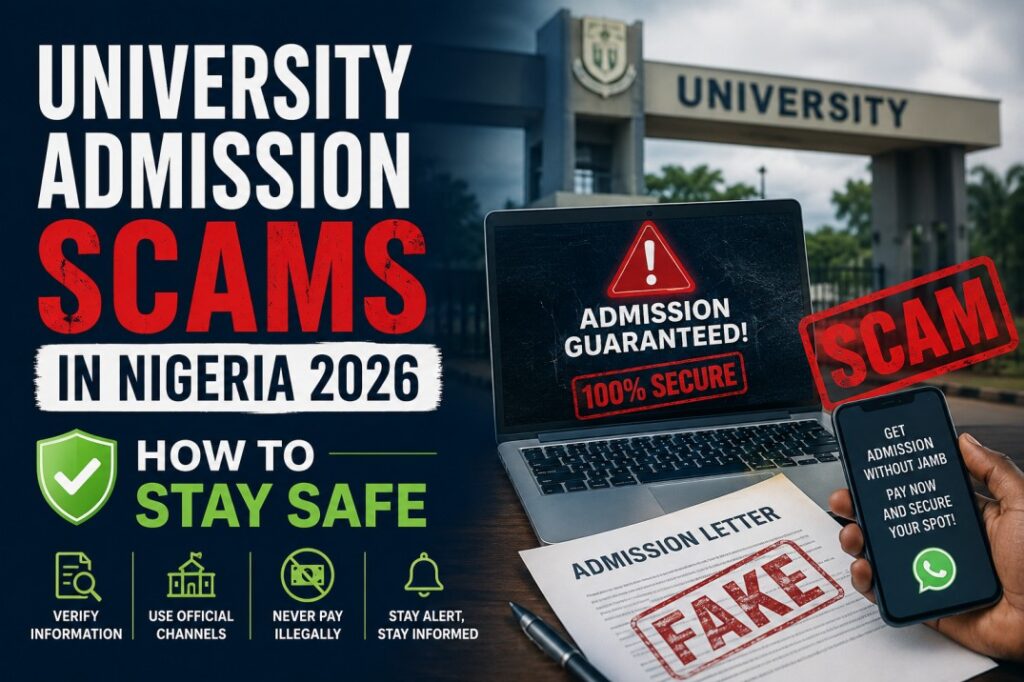
If you’re a Nigerian student waiting for university admission scams alerts, this is urgent. Fraudsters are actively targeting JAMB, UTME, and Post-UTME candidates through fake Facebook pages, WhatsApp messages, and emails promising “smart registration” and fast-track admission processing. The University of Abuja recently warned students about these schemes, but many young Nigerians are still falling victim. In this guide, I’ll show you exactly how to spot fake admission offers and use only official channels to register for your university entrance exams.
Why University Admission Scams in Nigeria Are Increasing in 2026
Admission fraud has become more sophisticated. Scammers create pages that look almost identical to official university social media accounts. They promise shortcuts to admission, claiming they have “connections” inside universities or access to special registration portals. The truth? The University of Abuja confirmed that all legitimate communications come through official channels only. No university contacts students via random WhatsApp numbers or personal Facebook accounts offering admission help.
Furthermore, these scams exploit the stress and uncertainty students feel during admission season. When you’re anxious about results and waiting for acceptance, it’s easy to believe someone offering a solution—especially if they ask for what seems like a “small” processing fee.
How to Identify Fake University Admission Offers
Here are the red flags you must watch for:
- Unsolicited contact: Real universities never contact you first via Facebook or WhatsApp with admission offers.
- Requests for money upfront: Legitimate registration (JAMB UTME, Post-UTME) happens online through official portals. There’s no “processing fee” to a personal account.
- Poor grammar or spelling: Official university communications are professionally written. Scam messages often have errors.
- Vague promises: Phrases like “guaranteed admission” or “bypass JAMB” are impossible and illegal.
- Private accounts: Scammers often use personal profiles or newly created pages, not verified official university accounts.
- Pressure to act quickly: “Limited slots available—send money NOW” is a classic fraud tactic.
Official Channels for JAMB, UTME, and Post-UTME Registration
Always use these legitimate platforms:
- JAMB Registration: Visit jamb.org.ng only. Create an account, purchase a PIN, and register directly on the portal.
- UTME Exams: Register through the official JAMB website. Your exam slip and results come via your JAMB account.
- Post-UTME Screening: Each university publishes its own admission requirements. Check the university’s official website (not Facebook) for Post-UTME dates and portal links. For example, Ignatius Ajuru University of Education (IAUE) opened its 2026/2027 Post-UTME portal through official channels.
In addition, follow your university’s official social media accounts (check for verification badges on Instagram, Twitter, and Facebook). However, never respond to direct messages offering admission help.
What to Do If You Suspect a Scam
If a fake admission page or message contacts you:
- Do not send money or personal information.
- Screenshot the conversation as evidence.
- Report the page to Facebook/WhatsApp using the platform’s abuse reporting feature.
- Contact the university directly using contact details from their official website (not from the scammer’s message).
- Report to JAMB if the scam involves UTME or JAMB services. Email: [email protected]
- Alert the National Information Technology Development Agency (NITDA) if you lose money, and consider reporting to the police.
Protect Yourself: Smart Admission Registration Tips
Therefore, here’s how to register safely:
- Bookmark the official JAMB website (jamb.org.ng) to avoid fake lookalike sites.
- Use only your official JAMB account to track exam dates, results, and Post-UTME invitations.
- Check the university’s official website for Post-UTME requirements and registration links—never click links from social media.
- Verify contact numbers: Call the university’s main switchboard (found on their official website) to confirm any admission news.
- Share this information with classmates and friends. JAMB registration tips
Real Success Stories: Legitimate Admission Pathways
Thousands of Nigerian students gain admission every year—without paying scammers—by following the proper process. Your admission depends on your UTME score, subject combinations, and performance in the university’s Post-UTME screening. There are no shortcuts, but there are no surprises either if you use official channels.
Frequently Asked Questions About University Admission Scams
Is it safe to respond to university admission messages on Facebook?
No. Legitimate universities do not send unsolicited admission offers via Facebook or WhatsApp. All official communications come through the JAMB portal, official university websites, or verified university email addresses. If a university pages messages you first with an admission offer, it’s almost certainly a scam. Always initiate contact by visiting the official university website yourself.
What should I do if I’ve already paid money to a fake admission agent?
Stop communication immediately and do not send more money. Report the scammer to the payment platform (bank, Momo operator, or remittance service) and provide proof of the transaction. File a report with the Nigerian Police Force Cybercrime Unit or NITDA. Contact your university’s admissions office directly to confirm your actual admission status. Recovery is difficult, but reporting protects others from the same scam.
How can I verify a university’s official social media account?
Look for a blue verification badge next to the university’s name on Facebook, Instagram, or Twitter. However, even verified accounts don’t send unsolicited admission offers. Visit the university’s official website first—it will list official social media handles and contact information. Call the university’s main number (from their website) to confirm account handles if you’re unsure.
Your Next Steps: Stay Safe and Succeed
University admission in Nigeria is competitive, but it’s transparent when you use official channels. Don’t let fear of missing out make you fall for scams. Check the JAMB official portal regularly, verify your university’s Post-UTME requirements on their official website, and never pay anyone claiming to have “inside connections.” JAMB portal login guide
Share this post with your friends and family. Help others stay safe from university admission scams. If you’ve encountered a scam, drop a comment below (without sharing personal details), and let’s raise awareness together. Your admission journey should be stressful enough without fraud—let’s keep it honest.
Have you heard of admission scams targeting Nigerian students? Comment below or share this with someone preparing for JAMB or Post-UTME. Together, we stop fraud.