College Admissions Changes 2026: What Nigerian Students Need to Know
College admissions is changing in 2026. Learn how federal scrutiny, AI fluency requirements, and enrollment shifts will impact Nigerian students pursuing university education—whether locally or internationally.
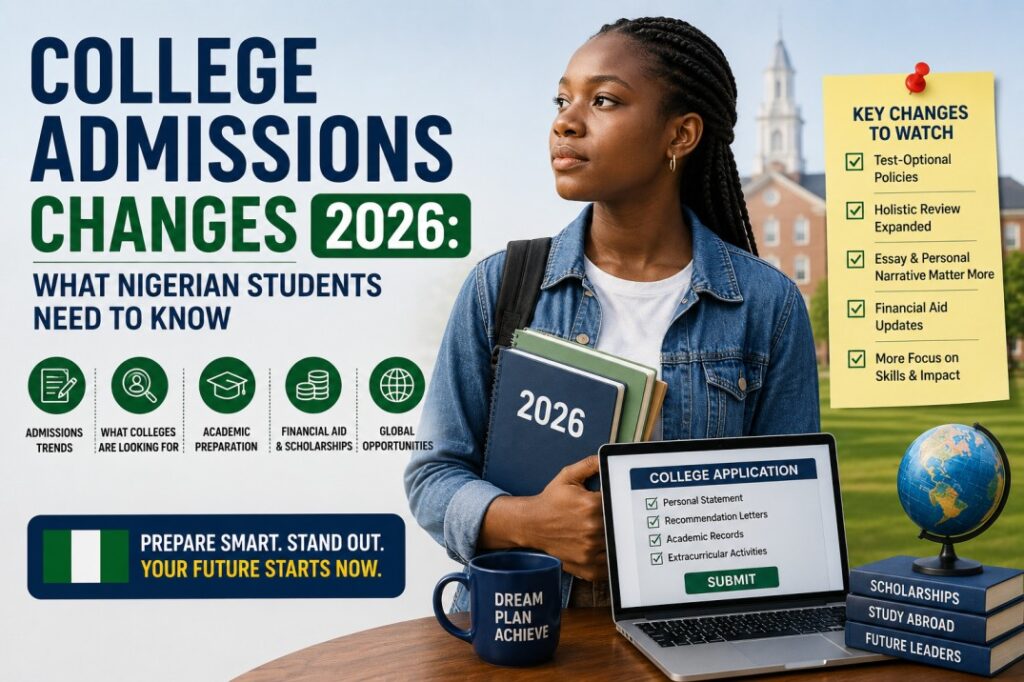
The landscape of college admissions changes 2026 is shifting rapidly, and Nigerian students aspiring to study abroad need to stay informed. From federal government scrutiny of enrollment outcomes to the integration of artificial intelligence in education, universities worldwide are redefining how they admit and develop students. Whether you’re preparing for JAMB, UTME, or planning to pursue higher education internationally, understanding these changes will help you position yourself for success.
Federal Scrutiny of College Admissions: What’s Changing?
In 2026, the federal government is examining college enrollment outcomes more intensely than ever before. This means universities are facing increased pressure to demonstrate fairness, transparency, and measurable results in their admission processes. Colleges are bracing for stricter regulations and accountability measures. For Nigerian students, this translates to more standardized admission criteria and clearer pathways to qualification. Universities can no longer rely solely on subjective evaluations—they must justify their admission decisions with concrete data.
AI Fluency: The New Skills Universities Are Teaching
Furthermore, colleges worldwide are now prioritizing AI fluency as a core skill. According to The Chronicle of Higher Education, universities are eager to demonstrate that they’re preparing students for an AI-driven future. However, many institutions are still figuring out exactly how to implement comprehensive AI literacy programs across their curricula. This means Nigerian students entering university in 2026 should expect AI training to be embedded in nearly every discipline—from business to medicine to engineering.
Why AI Fluency Matters for Your Career
Having AI skills sets you apart in the job market. Employers now expect graduates to understand how artificial intelligence works, how to use AI tools responsibly, and how to think critically about AI’s implications. If you’re preparing for university, consider learning basic Python, understanding machine learning concepts, or exploring AI applications in your field of interest.
Small Colleges Facing Enrollment Challenges
In addition, smaller institutions are struggling as students increasingly flock to large public universities. As noted by The Chronicle of Higher Education, many small colleges now view “flat” enrollment—maintaining current student numbers without growth—as a realistic success metric. For Nigerian students, this presents an opportunity: smaller colleges often offer more personalized attention, smaller class sizes, and better scholarship opportunities to attract international students. Don’t dismiss smaller institutions; they may offer better value and mentorship.
What This Means for Nigerian Students Planning University Admission
Therefore, here’s how these 2026 college admissions changes affect you:
- Expect stricter admission standards: Federal scrutiny means universities must be more transparent about their requirements and processes.
- Develop AI skills now: Start learning about artificial intelligence, data analysis, or coding before you apply to university.
- Consider all university sizes: Smaller colleges may offer better financial aid and personalized support for international students.
- Document your achievements: With more standardized processes, ensure your academic records, test scores, and extracurricular activities are well-organized and verified.
Preparing for JAMB and International University Applications
Whether you’re taking JAMB examination tips or applying to universities abroad, these trends highlight the importance of holistic preparation. Focus on academic excellence, develop digital and AI literacy, and demonstrate your unique value as a candidate. Research universities thoroughly—don’t just apply to the largest institutions. Smaller colleges may be more willing to invest in your success.
Frequently Asked Questions About College Admissions Changes 2026
How will federal scrutiny of college admissions affect Nigerian students?
Federal scrutiny means universities must demonstrate fairness and transparency in their admission processes. For Nigerian students, this means clearer admission criteria, more standardized evaluation methods, and less room for bias. You’ll need strong academic credentials and verified qualifications, but the process should be more predictable and merit-based.
Do I need to know artificial intelligence to get into university in 2026?
While AI knowledge isn’t necessarily a requirement for admission, it’s becoming increasingly valuable. Universities now expect students to develop AI fluency during their studies. Having basic AI literacy—understanding what AI is, its applications, and its limitations—will make you a more competitive applicant and better prepared for your degree program.
Should Nigerian students apply to smaller colleges or large universities?
Both have advantages. Large universities offer prestigious names and extensive resources, while smaller colleges provide personalized attention, better student-to-faculty ratios, and often more generous financial aid packages for international students. Choose based on your learning style, financial situation, and career goals. Smaller colleges are increasingly competitive for enrollment, which means they’re actively recruiting talented international students like you.
Ready to take the next step in your education journey? Check the official JAMB portal for the latest exam schedules and requirements. Share this article with your classmates and friends preparing for university—knowledge is power, and staying informed about college admissions changes 2026 gives you a competitive edge. Good luck!