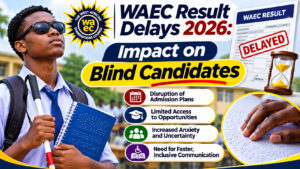
WAEC Result Delays 2026: Impact on Blind Candidates
WAEC result delays are crushing blind candidates’ admission dreams. Learn how 116,031 students face barriers, what this means for JAMB deadlines, and steps you can take now.
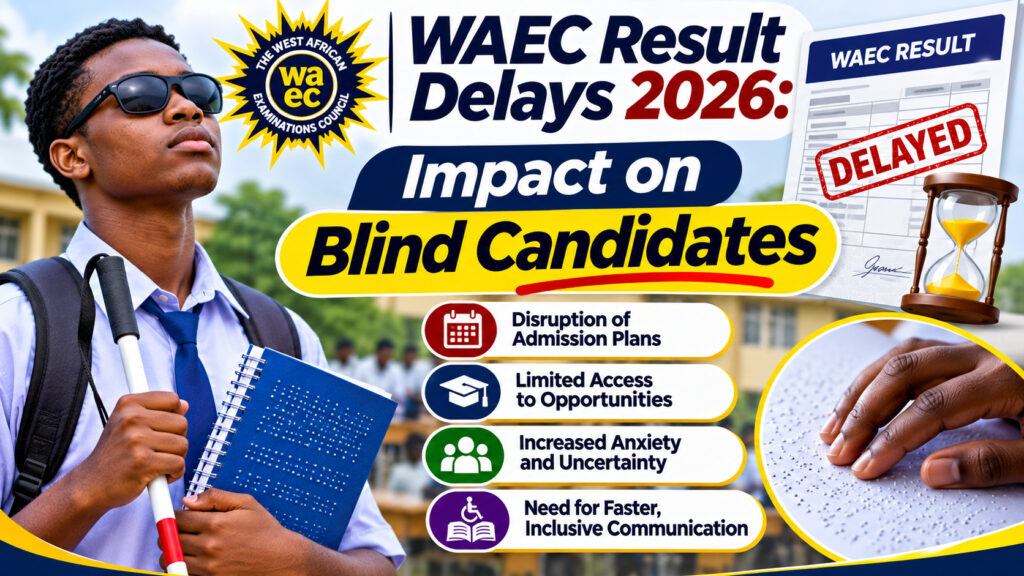
The WAEC result delays affecting blind candidates have become a pressing concern for Nigerian students seeking university admission. According to findings, the West African Examinations Council (WAEC) released examination results on August 5, 2026, after processing results from 1,959,668 registered candidates across 24,207 schools. However, 116,031 candidates—including visually impaired students—are still waiting for their results, creating unfair barriers to their admission prospects.
Understanding the WAEC Result Delay Crisis
WAEC Head of National Office, Amos Dangut, announced that 1,950,726 candidates sat the examination, with 1,834,695 (94.05%) having their results fully processed and released. The remaining 116,031 candidates face delays, a situation that disproportionately affects blind and visually impaired students who already navigate additional challenges during exam registration and writing.
Furthermore, these delays directly impact the JAMB 2026/2027 admission timeline. With October 31, 2026, set as the deadline for public universities to conclude admissions, blind candidates miss critical windows to submit their results to institutions, effectively locking them out of early admission opportunities.
How Result Delays Affect Blind Candidates’ Admission Chances
Blind and visually impaired candidates already face significant accessibility challenges during examinations. The additional burden of delayed results compounds these barriers. Therefore, delayed WAEC results mean:
- Missing university application deadlines
- Reduced chances of admission in first-choice institutions
- Increased stress and uncertainty about academic futures
- Limited time to arrange accommodation and support services at universities
What Blind Candidates Should Do Now
In addition, affected candidates should:
- Check the WAEC official portal regularly for result updates
- Contact WAEC directly if your result status remains pending
- Prepare documentation proving you sat the examination
- Inform universities of your result delay situation when applying
- Consider using the JAMB CAPS portal to track admission progress
The Broader Accessibility Issue in Nigerian Education
This situation highlights systemic accessibility gaps in Nigeria’s examination and admission systems. disability inclusion in Nigerian education Blind candidates deserve equal access to timely information and support. Education authorities must ensure that exam delays don’t compound existing discrimination faced by visually impaired students.
Moreover, universities and JAMB should prioritize supporting candidates with special needs during the admission process. Proper communication, extended deadlines for delayed results, and accessible platforms are essential.
Frequently Asked Questions
How many WAEC candidates are affected by the result delays?
Approximately 116,031 candidates out of 1,950,726 who sat the examination are experiencing result delays. This represents about 5.95% of total candidates, including blind and visually impaired students.
Will delayed WAEC results affect my JAMB admission chances?
Yes, delayed results can impact admission because universities have tight deadlines. However, contact your institution’s admission office immediately to explain the delay and request accommodation. Many universities are willing to extend consideration for candidates with documented result delays.
What’s the deadline for JAMB 2026/2027 university admissions?
JAMB set October 31, 2026, as the deadline for public universities to conclude their admission processes. Private institutions may have different timelines, so check with individual universities for specific dates.
Don’t let WAEC delays derail your dreams. Check the official WAEC and JAMB portals today, contact your examination centre immediately if your result is still pending, and inform universities of any delays. Share this article with classmates facing similar challenges—together, we can advocate for better accessibility and support in Nigerian education. Your future matters, and you deserve fair treatment in the admission process.