Federal Colleges of Education in Nigeria Now Authorized to Award Degrees — What This Means for Students and Future Teachers
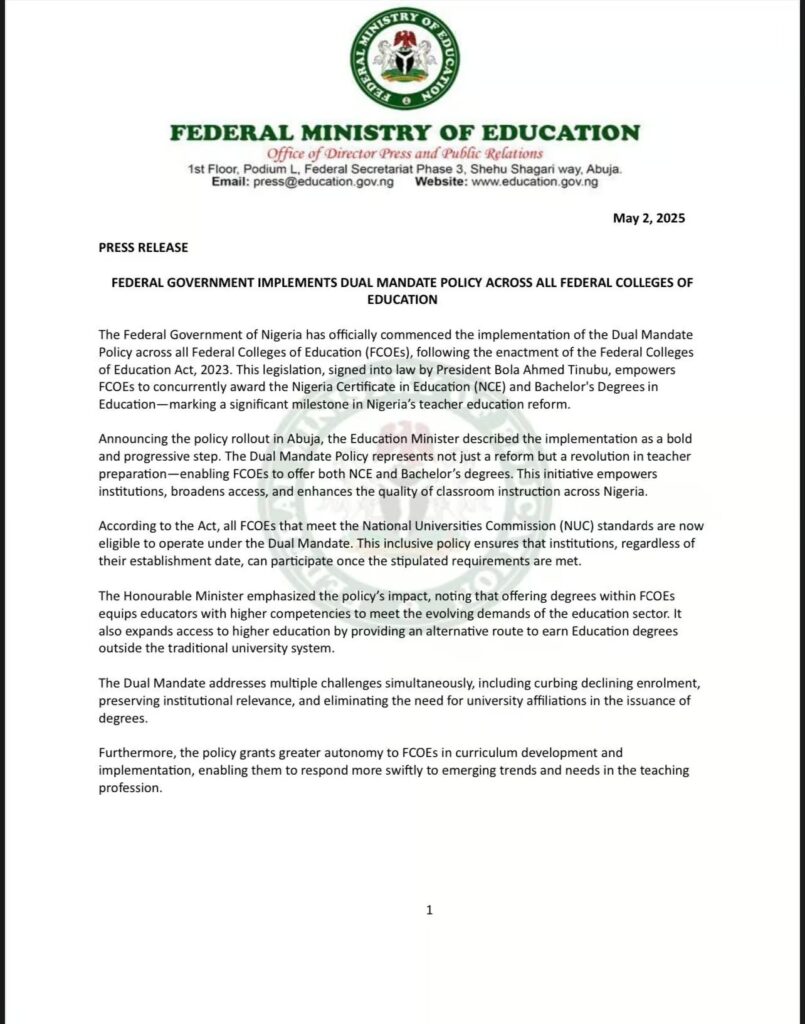
In a bold move set to reshape the future of teacher education in Nigeria, the Federal Government has approved a new policy that allows Federal Colleges of Education to award Bachelor’s Degrees in Education, in addition to the traditional Nigeria Certificate in Education (NCE).
This major shift follows the signing of the Federal Colleges of Education Act, 2023 by President Bola Ahmed Tinubu. The new law gives Federal Colleges of Education across the country a dual mandate—to train teachers through both certificate and degree programs.
What’s Changing?
Until now, Federal Colleges of Education could only award the NCE, while students had to attend universities to earn degrees in education. But under this new policy, any Federal College of Education that meets the National Universities Commission (NUC) standards can now run degree programs independently.
“This is not just a policy change—it is a complete transformation of how we prepare our teachers,” said Dr. Tunji Alausa, Minister of State for Education, during a press briefing in Abuja.
Why This Matters
This reform aims to:
- Expand access to higher education for aspiring teachers.
- Improve the quality of teacher training nationwide.
- Empower colleges to develop and manage their own curricula without relying on partner universities.
- Attract more students to Colleges of Education by offering both NCE and B.Ed. programs.
- Reduce the burden on traditional universities, especially in the education sector.
According to the Ministry, this reform helps colleges stay relevant in a fast-changing education landscape and equips graduates with stronger, more modern skills for the classroom.
A Step Toward Stronger Schools
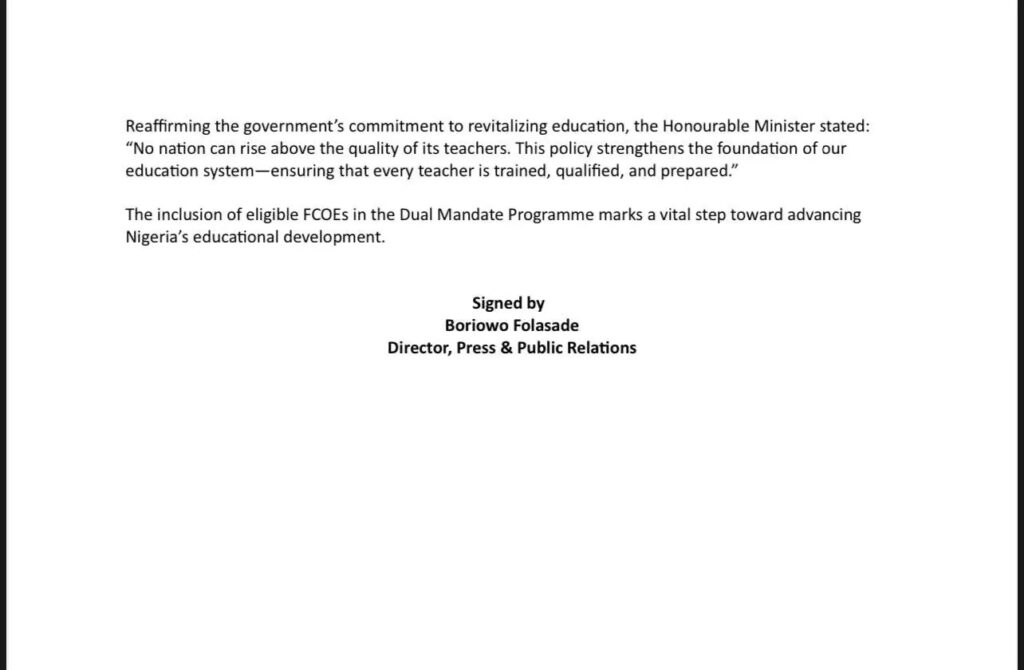
“This dual mandate strengthens the teaching profession and creates a pipeline of well-trained educators,” Dr. Alausa said. “Better teachers lead to better schools.”
He emphasized that the government’s goal is to ensure that every teacher in Nigeria is professionally trained, qualified, and ready to meet modern classroom demands.
What It Means for Students
For JAMB and secondary school students looking to pursue teaching careers, this is a game-changer. You can now:
- Earn a degree directly from a College of Education.
- Save costs associated with university admission.
- Access faster pathways into the teaching workforce.
Students no longer have to rely solely on universities for a Bachelor’s in Education. With more schools soon meeting NUC requirements, options for higher education in teaching will significantly expand.
What’s Next?
Federal Colleges of Education that meet the required standards can begin admitting students for degree programs. Prospective students and parents are encouraged to check updates from the Federal Ministry of Education and the NUC to know which colleges are qualified under the new policy.
Bottom Line
This reform not only transforms teacher training but also strengthens Nigeria’s entire education system. As the policy rolls out, students, educators, and school owners should prepare for a new era in Nigerian education—one where colleges can do more, faster, and better.
For more details, read the official Federal Ministry of Education press release on the Dual Mandate Policy.
You may also like to read: FATE Scholar Programme 2025: Full Tuition Scholarship for Nigerian Students in Science, Tech, Arts, and More